
Understanding the Five Key Variables That Affect Film Thickness

Consistency and precision are the cornerstones of any high-quality finishing operation. In a recent episode of The Finishing Touch Podcast by Superfici America, host Bret Johnson discussed one of the most critical factors in achieving a perfect finish: film thickness.
From understanding the basics of wet film measurement to balancing the key variables that influence coating application, this episode offers valuable insights for both new operators and seasoned professionals in automated finishing.
Why Film Thickness Matters
Film thickness plays a vital role in determining the appearance, durability, and performance of a finished product. Too much coating can lead to defects such as runs, blistering, or cracking, while too little can result in poor coverage, dry spray, or adhesion issues.
Finding the right balance ensures not only a superior finish but also optimized production efficiency and material savings key goals in any automated finishing line.
Measuring Film Thickness
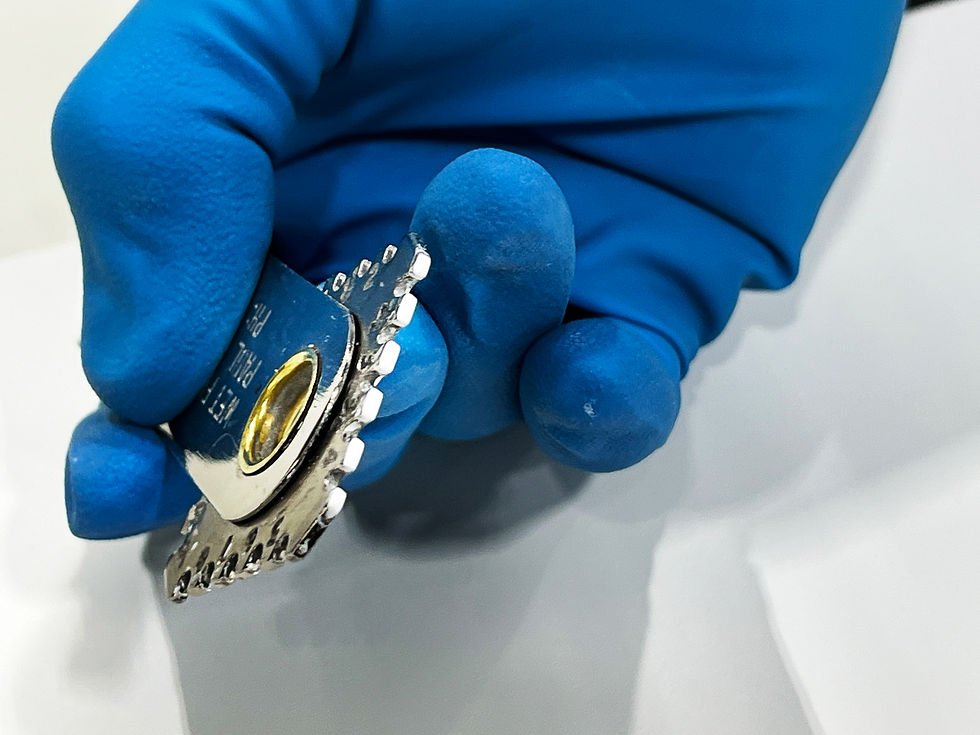
Before diving into the variables, the episode explains how film thickness is commonly measured using a wet film gauge. This simple tool measures the thickness of the wet coating on a surface in mils (thousandths of an inch). By checking which gauge tooth touches the coating, operators can determine how much paint is being applied before curing an essential step in maintaining consistency.
 |  |
The Five Variables That Influence Film Thickness
1. Tip Size
The spray gun tip size determines how much material can flow through the orifice.
Tip selection also depends on coating viscosity thicker paints generally require larger orifices. However, certain coatings benefit from being forced through smaller tips to achieve better atomization.
 | Rule of Thumb:
Testing in a lab environment is key to identifying the ideal tip size for each coating and application setup. |
2. Line Speed
Line speed refers to how fast parts move through the finishing line. Faster speeds increase production but reduce the amount of paint deposited on each part. As line speed increases, additional guns or adjusted settings may be required to maintain proper film build and coverage.
Rule of Thumb:
One spray gun per meter per minute of line speed.The Superfici America line of machines from the Mini to the Compact to the Magnum are designed with varying speed capacities to match production demands.
Line Speed | Number of Guns | Superfici America Machine |
Up to 4 meters per minute | 4 | Mini Plus |
5 – 6 meters per minute | 6 | Compact |
7 – 15 meters per minute | 8 – 16 | Magnum |
3. Reciprocator Speed
The reciprocator moves the spray guns back and forth, creating overlapping spray patterns.Maintaining about 50% overlap is essential to avoid striping or uneven coverage. Running the reciprocator slightly faster than the minimum required speed ensures even coating, less turbulence, and reduced wear on machine components all contributing to longer system life and smoother finishes. |  |
4. Fluid Pressure
Fluid pressure is one of the most critical and sensitive variables in achieving consistent film thickness. It controls the volume and velocity of coating material being delivered from the pump, through the lines, and ultimately out of the spray gun. The right balance ensures the coating flows smoothly, atomizes correctly, and lays down evenly on the substrate.
Fluid pressure isn’t just about how much material you’re putting on — it also affects the finish quality, transfer efficiency, and overall system stability. Too high of a setting can overwhelm the atomization air, flood the part with coating, and cause surface defects. Too low, and you risk uneven coverage, dry spray, or poor adhesion.

Rule of Thumb:
Higher pressure = more material (risking runs or thick films)
Lower pressure = less material (risking dry spray)
Different spray technologies operate within unique pressure ranges — from 10–20 psi for HVLP guns to 400–800 psi or more for air-assisted airless systems. Balancing this pressure is key to achieving smooth, consistent coatings.
5. Air Pressure
Atomization air pressure helps break up the coating at the gun’s air cap, creating the spray fan pattern.
 | Too much air pressure can over-atomize the coating, leading to dry spray. Too little, and you’ll see “tails” or uneven lines in the spray pattern. Modern systems like the Superfici Magnum can automatically adjust atomization air within the recipe, ensuring consistent results across different coatings and production runs. |
Balancing the Variables
Each of these five variables interacts with the others changing one often requires adjusting another. For example, reducing fluid pressure may require increasing air pressure to maintain atomization.
Understanding these relationships and documenting them through testing ensures repeatable, high-quality finishes. The Superfici America lab plays a key role here, helping customers fine-tune their setups before implementing them in production.
Key Takeaways
Precision in film thickness is critical to achieving optimal finish quality.
Each variable tip size, line speed, reciprocator speed, fluid pressure, and air pressure must be carefully dialed in.
Testing and documenting lab results make on-site setup faster and more consistent.
Automated systems can simplify adjustments and ensure reproducibility.
As Bret Johnson summarized, “There’s a reason why each of these settings exists they all work together to achieve a flawless finish.”
Need Help Perfecting Your Finish?
The Superfici America team is always ready to help troubleshoot, test, and fine-tune your finishing process.
📞 Contact your local sales rep
💻 Visit superficiamerica.com for tutorials and product information
📧 Email marketing@superficiamerica.com to request a free mil gauge or other finishing tools
Listen to The Finishing Touch Podcast Subscribe on YouTube to stay ahead of trends, technologies, and techniques in automated finishing.


Comments